A wash mitt should never be your first line of attack against a dirty vehicle. Road grit, diesel residue, salt and traffic film sit on the paintwork ready to be dragged across it. The best pre wash cleaner removes as much of that contamination as possible before contact washing, helping you work faster and reduce the risk of wash-induced marring.
For a busy valeting bay, the right product also has to earn its space. It needs to match the job, work at a sensible dilution and rinse cleanly without leaving the operator to fight streaks, residue or unnecessary dwell times. There is no single pre wash that is best for every vehicle and every level of grime. The right choice depends on what is on the paint, how often the vehicle is cleaned and what protection is already in place.
What makes the best pre wash cleaner?
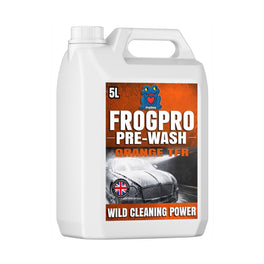
A good pre wash loosens and lifts soil before you touch the vehicle. That sounds simple, but road grime is rarely just mud. Daily drivers pick up an oily grey film from wet roads, brake dust, salt, bugs and airborne contamination. Vans, taxis, lorries and fleet vehicles often carry heavier traffic film around the lower panels, rear doors and wheel arches.
The best product for this stage combines cleaning strength with control. It should be capable of breaking down the dirt you are dealing with, yet suitable for the surface and protection level of the vehicle. Used properly, it reduces the amount of pressure needed later and gives your shampoo a much easier job.
Pre wash is not a replacement for shampoo. It is the preparation stage that makes a safer contact wash possible. Apply it to a cool vehicle, allow it to dwell without drying, then rinse thoroughly from the lower sections upwards. Starting low helps the product work on the dirtiest areas before it is diluted by runoff.
Traffic film remover for hard-working vehicles
Traffic film remover, often called TFR, is the practical choice when vehicles are properly soiled. It is commonly alkaline and designed to cut through the greasy, bonded road film that standard shampoo will not shift efficiently. For commercial operators handling regular fleet work, it is usually the most economical route because concentrated formulas can be diluted to suit the task.
Strength is useful, but it is not a reason to use a heavy dilution on every vehicle. A fresh weekly wash may only need a mild mix, while a white van that has spent a fortnight on wet motorways may require a stronger one. Overusing a powerful TFR can shorten the life of waxes and sealants, and careless use around sensitive trims, polished metal or neglected surfaces can create avoidable problems.
Always follow the dilution guidance for the product in use. Test a small inconspicuous area if the vehicle has delicate finishes, and never let a chemical dry on the panel. For trade work, a labelled dilution bottle or pump sprayer removes guesswork and keeps results consistent across the team.
Snow foam for routine maintenance washing
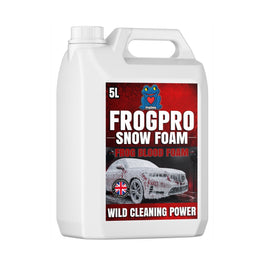
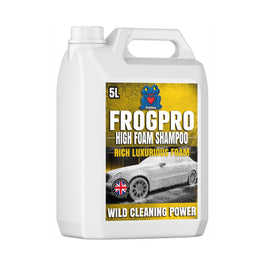
Snow foam is popular because it gives excellent coverage and a clear visual indication of where the product has been applied. Through a suitable foam lance, it clings to the paintwork for a period, softening loose dirt and helping it run away during rinsing. It is particularly useful on regularly maintained cars where the aim is to clean safely without stripping protection.
However, thick foam alone does not equal cleaning power. Some foams are designed mainly for gentle maintenance, while others are formulated to clean more actively. On a lightly dusty, protected vehicle, a pH-neutral snow foam may be all that is required. On a neglected work vehicle with thick road film, it may need to follow a targeted TFR application rather than replace it.
For best results, cover the vehicle evenly but avoid wasting product on glass roofs, hot panels and areas that will dry quickly. Leave it for the stated dwell time, then pressure rinse fully. If the foam vanishes instantly, it may be too weak, applied to a hot surface or facing contamination it is not designed to tackle.
Citrus pre wash for targeted grime
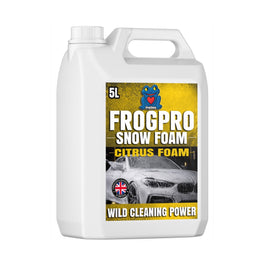
Citrus-based pre wash products sit between gentle snow foam and a stronger traffic film remover. They are often effective on oily grime, insect remains and dirt along the lower bodywork, mirrors and front end. Many detailers use a citrus pre wash as a targeted treatment before snow foam, particularly on cars that receive frequent maintenance washes.
The trade-off is that citrus products vary widely in strength. Some are mild enough for routine use at the correct dilution, while others are concentrated cleaners intended for tougher jobs. Treat the label as the instruction, not a suggestion. A product that performs brilliantly on the sill panels may be unnecessary on clean upper doors.
Choosing a pre wash cleaner for the job
The easiest way to choose is to assess the vehicle before reaching for the sprayer. If it is a protected car with light road dust, start with a gentle snow foam. If the lower panels are grey with motorway film, use a diluted traffic film remover or citrus pre wash where needed. If you are preparing a vehicle for polishing or applying fresh protection, a stronger clean may be appropriate, provided the surfaces are in good condition and the product directions allow it.
For professional operations, dilution economy matters as much as first-hit power. A concentrated TFR that can be adjusted for routine and heavy-duty work can offer better value than a ready-to-use product, especially when washing several vehicles a day. For home users, ready-to-use products can be simpler and remove the risk of mixing too strongly, although they are less economical for regular use.
Equipment makes a difference too. A pump sprayer gives controlled coverage for TFR and citrus products, especially around wheel arches and lower panels. A foam lance is the better tool for snow foam, but it needs a compatible pressure washer and the correct adjustment to produce usable foam rather than a watery coating. FrogChem supplies the chemicals and wash equipment needed to build a process that suits both a driveway routine and a working valeting setup.
How to apply pre wash without causing problems
Start in the shade wherever possible, with paintwork that is cool to the touch. Heat accelerates drying and can leave product marks, particularly on dark paint, glass and exterior trim. If the vehicle is heavily caked in loose mud, give it an initial low-pressure rinse first so the chemical can reach the bonded dirt beneath.
Apply the chosen pre wash evenly, concentrating on the front bumper, mirrors, lower doors, rear end, wheel arches and number plate recesses. These areas collect the worst contamination. Do not spray into exposed electrical components, air intakes or damaged areas, and take extra care around vinyl wraps, matte finishes and freshly repaired paintwork.
Allow the product to dwell for the recommended time. Watch the surface rather than walking away to start another task. In warm or windy conditions, work one section at a time and rinse before it dries. Then use a thorough pressure rinse, paying attention to panel gaps, badges, arches and behind the wheels where cleaner and loosened grime can remain.
Only after rinsing should you move to a contact wash with a quality car shampoo, clean mitt and two-bucket method or suitable rinse bucket system. The paint should feel noticeably cleaner before the mitt touches it. If it still carries a heavy gritty film, repeat the pre wash step rather than trying to scrub it away.
Avoid these common pre wash mistakes
The most common mistake is assuming stronger always means better. A high-strength chemical can be useful for heavy commercial grime, but it may remove or weaken existing wax protection and is unnecessary for a maintained vehicle. Match the dilution to the soil level and increase it only when the result calls for it.
Another mistake is applying product to a hot, dry vehicle in direct sunshine. Even a well-formulated cleaner can dry before it has done its job. Finally, do not judge success by how dramatic the foam looks. Judge it by how much dirt rinses away and how safely the remaining contact wash can be completed.
A pre wash that suits your vehicles, water pressure and working routine will save time at every wash. Start gently, use stronger cleaning only where the grime demands it, and let the rinse remove the dirt before your mitt ever has to touch the paint.