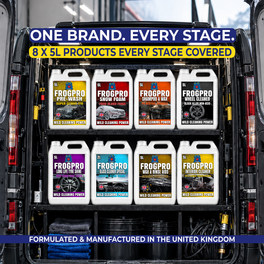
A ceramic coating kit review should start well before the bottle is opened. The finish a coating leaves behind matters, but the real test is whether it can be applied consistently, cure properly and stand up to the washing routine that follows. For a busy valeter, dealership or serious home detailer, a kit that looks excellent for a week but is awkward to use or difficult to maintain is poor value.
Ceramic coatings can add gloss, water behaviour and a sacrificial protective layer to paintwork. They are not a substitute for safe washing, regular maintenance or correcting damaged lacquer. Choosing the right kit means looking at the full job: surface preparation, application conditions, curing time, expected durability and the products needed to look after it.
What a Ceramic Coating Kit Should Deliver
A worthwhile coating kit should make the vehicle easier to keep clean while improving the clarity and depth of the paint. Water should bead or sheet away more readily, bonded grime should be less likely to cling to the surface, and the finish should retain a freshly detailed appearance between washes.
That said, impressive beading is not the only sign of protection. Some coatings sheet water more than they bead, particularly once they have been driven in wet weather or washed several times. The more useful question is whether the surface releases dirt easily during a proper maintenance wash and whether the gloss remains even across panels.
Durability claims need reading with care. A product advertised as lasting several years may be capable of doing so under ideal preparation, indoor application, correct cure time and regular maintenance. A vehicle parked outside, used daily on salted winter roads and taken through harsh wash processes will have a harder life. For trade work, dependable performance and a repeatable application process can be more valuable than the biggest number on the label.
Ceramic Coating Kit Review: Look Beyond the Bottle
Many kits are sold around a headline ingredient or a claimed hardness rating. These details can be useful, but they do not tell the whole story. A coating’s formula, solvent system, flash time and compatibility with the vehicle’s paint all affect the result.
A good kit should be clear about the working conditions it needs. Temperature and humidity affect how quickly a coating flashes. In a cold unit it may remain wet for longer; in a warm, humid workshop it may flash rapidly and become harder to level. If the instructions leave too much guesswork, inexperienced users can easily create high spots - darker, uneven patches of excess coating that have cured on the panel.
The contents also matter. Some kits provide only the coating and applicator, which may suit an experienced detailer who already has panel wipe, quality microfibres and lighting. Others include preparation and aftercare products, making more sense for a first-time user or an owner working at home. Neither approach is automatically better, but the buyer should know what is missing before booking the job in.
When comparing kits, check whether the package includes or recommends:
- a paint-safe panel wipe or surface preparation product
- suede applicator cloths and a suitable application block
- enough quality microfibre cloths for levelling and final buffing
- a maintenance shampoo that will not leave gloss enhancers or residue behind
- a coating-safe topper or maintenance product, where the system calls for one
Preparation Decides the Result
Ceramic coating is applied over whatever is left on the paint. If that is traffic film, tar, iron fallout, old wax, polishing dust or poor machine polishing, the coating can preserve the problem rather than solve it. This is why preparation takes longer than application on most quality jobs.
Start with a thorough pre-wash and contact wash using suitable vehicle cleaning chemicals. Clean wheels, shuts, badges and lower panels properly, as contamination from these areas can be transferred back onto the paintwork. Decontaminate the surface where required, then inspect it under strong lighting.
Paint correction is not compulsory on every vehicle, but it is often the difference between an acceptable coating job and a premium one. A coating will improve gloss, yet it will not remove wash marring, deeper scratches or etched water spots. On a newer vehicle with sound paint, a light enhancement polish may be enough. On neglected paintwork, more correction may be needed before protection is applied.
After polishing, remove residue thoroughly with a panel wipe. This stage is not merely cosmetic. Oils and fillers can interfere with bonding and give a false impression of correction. Work panel by panel and make sure the surface is clean, dry and cool before coating.
Application Is About Control, Not Speed
A ceramic coating is best applied in a clean, dry space with good lighting. Direct sunlight, wind, damp air and a hot panel all make the job less forgiving. Garages and workshops vary, so choose a kit whose stated working window suits the conditions available.
Apply a small amount to the applicator and work in controlled sections. Bonnet sections, half a door or a quarter panel are usually easier to manage than attempting large areas at once. Use an even cross-hatch pattern, then watch for the coating to flash according to the manufacturer’s instructions.
The levelling stage deserves full attention. Use a clean microfibre to spread and remove excess product, followed by a second towel if needed to catch any remaining residue. Check the panel from several angles. Coatings can look perfect under one light source and reveal high spots when viewed under an inspection light.
Do not chase coverage by applying a heavy layer. More product does not automatically mean more protection. It can increase product use, make levelling harder and raise the risk of curing marks. Where a second layer is recommended, follow the stated interval rather than applying it immediately out of habit.
Curing Time Is Part of the Job
Once coating has been applied, the vehicle needs protecting from water, dust and disturbance while the product cures. The exact timeframe varies by formula, but rushing the handover is a common mistake. Rain on a freshly coated car, a quick wash too soon or contact with dirty covers can compromise the finish.
For commercial work, this affects scheduling. A fast-flashing coating may save time during application but still need several hours indoors before it can be exposed to weather. A longer-lasting product may also require a more controlled environment. Build this into the booking rather than treating cure time as an inconvenience.
Customers should receive clear aftercare advice. Avoid washing during the initial cure period specified by the product. After that, use a pH-neutral shampoo, clean wash media and a safe drying method. Strong traffic film removers, abrasive polishes and automatic brush washes can shorten the coating’s useful life.
What Coating Protection Cannot Do
A coating is not paint protection film. It will not stop stone chips, prevent supermarket car park dents or make deep scratches disappear. It can offer some resistance to light chemical contamination, UV exposure and routine grime, but it is a thin layer and should be sold honestly.
It is also not a licence to neglect washing. Dirty water spots, bird droppings and tree sap should still be removed promptly. If contaminants are left to bake onto the surface, they can mark the coating and, in severe cases, the paint beneath it. The benefit is that a maintained coated vehicle is usually quicker and more pleasant to clean.
Choosing the Right Kit for the Job
For a home user, a forgiving kit with clear instructions and modest working times is often the sensible choice. A daily driver does not always need the most complex multi-layer system. Good preparation, careful application and sensible aftercare can produce a finish that looks noticeably better and stays easier to maintain.
For valeters and dealerships, repeatability should lead the decision. Consider bottle yield, flash behaviour, cure time, training requirements and how the coating fits into the rest of the wash and preparation process. A system that works predictably across a range of paint types and workshop conditions is easier to price, schedule and stand behind.
The best coating is not necessarily the one with the boldest durability claim. It is the one matched to the vehicle, the operator’s experience and the maintenance routine that will follow. Put the same care into washing and drying the coated vehicle as you put into applying the coating, and the protection has a far better chance of earning its place on the paintwork.