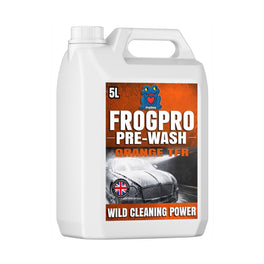
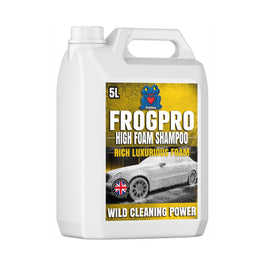
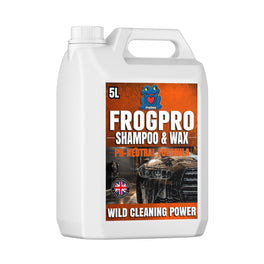
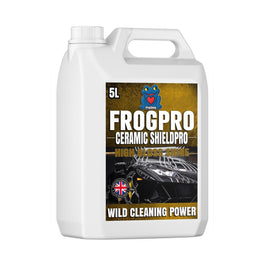
A freshly polished car can look excellent under forecourt lights or on the driveway, but the real test starts a week later after rain, road film and a couple of motorway runs. That is where ceramic coating vs wax becomes a practical question, not just a detailing one. If you are choosing protection for customer vehicles, your own car, or a busy fleet, the right option depends on how long you need it to last, how much prep you can justify, and what finish you expect to maintain.
Ceramic coating vs wax: the main difference
The short version is simple. Wax is a sacrificial protective layer that adds gloss, water beading and short-term paint protection. Ceramic coating is a longer-lasting protective layer designed to bond more firmly to the paint and resist environmental fallout more effectively.
That difference affects nearly everything else. Wax is quicker to apply, easier to replace and usually cheaper to get started with. Ceramic coating asks more from the prep stage and the application, but it repays that effort with much better durability and less frequent reapplication.
For a weekend detailer who enjoys topping up protection every few weeks, wax still makes sense. For a valeting business, dealership or driver covering serious mileage, ceramic coating often offers the better return over time.
What wax does well
A good wax still earns its place because it is straightforward and forgiving. Applied properly to clean paintwork, it lifts gloss, deepens darker colours nicely and leaves a slick finish that helps water run off the panel. For many users, that warm finish is still the appeal.
Wax is also useful when speed matters. If you are turning around vehicles regularly, or you want a protection step that does not demand specialist conditions, wax can slot into a standard wash and decontamination routine without too much disruption. For home users, that lower barrier makes it a realistic option.
There is also less risk in the application. If wax goes on unevenly, or you miss a spot, it is generally easy to correct. You are not working against cure times in the same way, and you do not need the same level of paint correction beforehand to get a respectable result.
The trade-off is durability. Wax will not stand up to repeated washing, harsh weather, traffic film removers, road salt and routine wear in the same way ceramic coating can. On a daily-driven vehicle, especially one parked outside, its performance tends to fall away much sooner.
Where ceramic coating pulls ahead
Ceramic coating is built for customers who want longer intervals between major protection jobs. Once applied correctly to properly prepared paint, it creates a tougher, more durable layer than wax. That usually means better chemical resistance, better longevity and stronger hydrophobic behaviour over time.
In practical terms, the car is often easier to maintain. Dirt still sticks, despite what some marketing claims suggest, but it generally releases more easily during the wash process. Water behaviour tends to remain stronger for longer, and the paint can hold that cleaner, sharper look with less frequent topping up.
This is especially useful for high-use vehicles. Think dealer stock sitting outside, driving school cars seeing daily wear, lorries and vans covering distance in all weather, or private cars that rack up motorway miles. If the vehicle has to stay presentable without constant re-waxing, ceramic coating has a clear advantage.
It also suits buyers who value consistency. Wax tends to decline quite noticeably, especially after detergent exposure and bad weather. Ceramic coating usually gives a more stable level of protection across a longer period, assuming the wash routine is sensible.
The catch with ceramic coatings
Ceramic coating is not magic, and this is where some buyers get caught out. The product itself may last far longer than wax, but only if the preparation is right. If the paint is poorly washed, contaminated, oxidised or full of swirls, the coating will lock that condition in. It protects what is underneath - it does not fix it.
That means prep matters more. A proper application often involves thorough washing, decontamination, tar and fallout removal, and at least some paint correction if you want the finish to justify the upgrade. For trade users, that adds labour time. For DIY users, it adds complexity.
Application conditions matter too. Some coatings are more user-friendly than others, but in general you need control over temperature, lighting and panel wipe stages. If you rush it, high spots and uneven curing can leave a finish that is harder to put right than a badly applied wax.
So while ceramic coating is the stronger long-term option, it is not always the better short-term business decision on every job. If the customer wants an economical enhancement on a used vehicle sale, a quality wax may be the smarter fit.
Cost versus value
On purchase price alone, wax usually wins. It is cheaper to buy, cheaper to apply and easier to keep in rotation as part of a regular maintenance offer. That is why it still has a place in valeting packages and retail routines.
But cost and value are not the same thing. If a wax needs regular reapplication to keep delivering the look and protection the customer expects, the ongoing time and product use can close the gap quickly. Ceramic coating costs more upfront, but for many users it reduces repeat labour and gives a more premium end result.
For businesses, the decision often comes down to service model. If you are offering quick enhancement details, wax remains commercially useful. If you are selling premium paint protection, ceramic coating gives you a stronger proposition because the performance difference is easier to justify over months rather than days.
For private owners, it depends on habits. If you enjoy washing and protecting your car regularly, wax is affordable and satisfying. If you want better longevity and less frequent protection work, ceramic coating usually makes more sense.
Gloss, beading and day-to-day appearance
This is the part many buyers focus on first, and fairly enough. Both products can improve gloss. Both can bead water well. Both can make a car look noticeably better after application.
The difference is in how that look develops over time. Wax often gives an immediately pleasing finish, particularly on darker paint, but that effect can drop off fairly quickly with weather and washing. Ceramic coating tends to deliver a cleaner, sharper look that holds up better over a longer period.
Neither option makes washing optional. Brake dust, road grime, insects and winter residue will still collect. The real gain with ceramic coating is that maintenance tends to be easier and the paint usually keeps its protected appearance more consistently between washes.
Which one suits your vehicle?
If the vehicle is a daily driver parked outdoors, ceramic coating is usually the more sensible choice. The extra resistance to weather, fallout and repeated washing gives it a practical edge.
If it is a show car, summer-use car or a vehicle that is detailed often, wax can still be perfectly valid. It gives good visual reward for less commitment, and some owners simply prefer the routine of reapplying it.
For commercial operators, the answer often comes down to throughput and standards. If you need something fast and presentable for regular stock preparation, wax is efficient. If you need protection that helps maintain appearance across longer service intervals, ceramic coating is the better working product.
That is why many professionals keep both in play. One is not automatically replacing the other. They solve different problems at different price points.
Ceramic coating vs wax for trade and home users
For trade users, ceramic coating is strongest where durability can be sold as part of a premium service. It works well for customers who keep vehicles longer, care about maintenance, and want a finish that does not fade quickly after a few washes. Wax remains useful for entry-level packages, forecourt prep and fast-moving work where budget matters.
For home users, the choice is more personal. If you want the easiest route to stronger long-term protection, ceramic coating is the upgrade. If you want low-cost protection and you do not mind reapplying it regularly, wax is still a solid option.
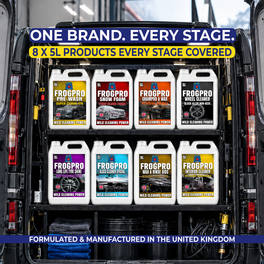
A supplier with depth across both categories, like FrogChem, gives buyers room to match products to the job rather than forcing one answer onto every vehicle.
So which should you choose?
Choose wax if you want simple application, lower upfront spend and you are happy to maintain protection regularly. Choose ceramic coating if you want stronger durability, easier long-term upkeep and better resistance to the conditions a daily-driven vehicle actually faces.
The best choice is not the one with the biggest claims on the label. It is the one that fits the vehicle, the customer, and the amount of maintenance that will realistically happen afterwards.
If you are honest about that from the start, you will get better results, fewer disappointments and paintwork that still looks worth the effort long after the first wash.