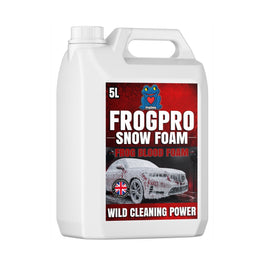
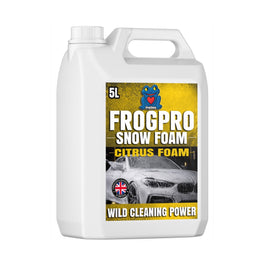
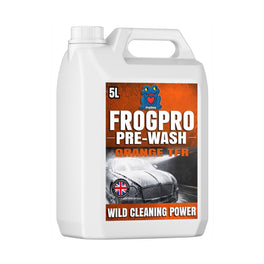
If your wash routine starts with a mitt on dry or heavily soiled paintwork, you're making the hardest part of the job harder than it needs to be. Snow foam gives you a safer starting point by loosening road film, grit and general muck before you touch the vehicle. For trade users and home detailers alike, that matters because less rubbing usually means less chance of inflicting swirls.
What snow foam actually does
Snow foam is a pre-wash chemical designed to cling to the vehicle and soften contamination before the main contact wash. The idea is simple - get as much dirt moving off the surface as possible before a mitt, sponge or brush goes anywhere near the paint.
That doesn't mean snow foam replaces washing. It does not turn a filthy van into a fully cleaned and protected finish on its own, and it won't remove every trace of traffic film, grease or bonded contamination. What it does well is reduce the amount of loose dirt left on the surface, which makes the next stage safer and more efficient.
This is why it has become standard kit in detailing bays, valeting set-ups and busy wash operations. When used properly, it helps improve wash quality while also speeding up the process. You spend less time dragging contamination around the paint and more time refining the finish.
Why snow foam matters before contact washing
Most wash damage happens during contact. The grit on lower panels, the film on the tailgate, the mess behind wheel arches - that is what creates micro-marring when it's rubbed across paintwork. A good pre-wash routine cuts that risk down.
Snow foam works by dwelling on the panel long enough to break down and lift lighter contamination. As it runs off, it carries dirt away with it. The result is not always dramatic in the way marketing photos suggest, because every vehicle and every product behaves differently, but the benefit is real when the rest of the wash process is sound.
For commercial users, the value is also practical. Cleaner surfaces before contact mean wash media stays cleaner for longer, rinse buckets get less filthy, and staff can work more consistently. For home users, it is one of the easiest upgrades to make if you're aiming for a better finish without turning a weekend wash into a full detailing session.
How to use snow foam properly
The best results come from using snow foam as part of a sequence, not as a stand-alone trick. Start with a cool vehicle out of direct sunlight if possible. If the panels are hot, the product will dry too quickly and dwell time drops off.
Apply the foam through a snow foam lance or foam gun attached to suitable equipment. Coverage matters more than theatrics. You want an even layer over the paintwork, glass and usually the wheels if the product is safe for them. Thick foam can look impressive, but cling alone is not the whole story. Chemical performance matters more than shaving-cream visuals.
Let it dwell for a few minutes, following the product guidance. Do not let it dry on the surface. Then rinse thoroughly from top to bottom or bottom to top depending on your preferred method and set-up. After that, move on to your contact wash with a proper shampoo.
If the vehicle is heavily soiled, especially with winter grime or dense traffic film, a citrus pre-wash or traffic film remover may be more effective as the first hit, with snow foam used alongside it or after it. This is where expectations need to be realistic. Snow foam is useful, but it is not magic.
Choosing the right snow foam for the job
Not all snow foam products are aimed at the same user or result. Some are pH neutral and designed to be gentler on waxes, sealants and coatings. Others are stronger cleaners intended to strip more contamination and work harder on neglected vehicles.
That choice depends on what you are washing and what is already on the paint. If the car has a wax or ceramic coating you want to preserve, a pH neutral snow foam is usually the safer bet for routine maintenance. If you're dealing with trade stock, fleet vehicles, work vans or vehicles that go too long between washes, a stronger pre-wash may make more sense.
There is always a trade-off. Gentler products are better for maintenance washing but may leave more behind on filthy panels. Stronger products clean harder but can reduce the life of existing protection if used too often. Neither approach is wrong. It depends on the finish required, the condition of the vehicle and how often it is being washed.
Equipment makes a difference
A lot of people judge snow foam before the set-up is right. Thin, watery foam is often down to poor dilution, a weak machine, the wrong lance setting or a basic foam bottle that doesn't generate enough consistency. The chemical gets blamed when the issue is really the delivery.
A decent pressure washer and foam lance will usually give the most reliable result. Water flow, pressure and the lance orifice all affect how the foam behaves. Even then, more foam is not always better. What you want is repeatable application, sensible dwell time and a product that rinses cleanly.
For trade environments, consistency is more important than novelty. A set-up that covers vehicles quickly, uses product economically and performs the same way across cars, vans and larger vehicles is worth more than a dramatic foam blanket that burns through chemical too fast.
Common mistakes with snow foam
The biggest mistake is expecting the pre-wash stage to finish the job. Snow foam should make washing safer and easier, not replace proper technique. If you skip the contact wash afterwards, the vehicle will usually still carry a film layer.
Another common issue is letting the foam dry. Once that happens, cleaning performance drops and you may create extra work. Washing in hot weather, on hot panels or in strong sun often causes this.
Over-concentrating the product is another one. More chemical does not always mean more cleaning power, and it can make rinsing harder or increase cost per wash without much return. Following the right dilution ratio is usually the smarter move.
Then there is poor rinsing. If loosened dirt is left sitting in shuts, trims or mirrors, it can run later and spoil the finish. A thorough rinse matters as much as the foam stage itself.
Is snow foam worth it for home users?
Yes, in most cases. If you care about keeping paintwork in good condition, snow foam is one of the easiest ways to improve your wash routine. It adds a step, but not a difficult one, and the reduction in contact with dirt is worth it.
It is especially useful if you wash regularly and want to maintain gloss without piling up wash marks over time. It also helps if your vehicle sees motorway miles, winter salt, muddy lanes or daily use where contamination builds quickly.
That said, if you're washing a lightly dusty car and using careful two-bucket technique with a good shampoo, the difference may be less dramatic than it is on a filthy daily driver. As ever, it depends on the dirt level and the standard you're aiming for.
Is snow foam worth it for trade users?
For valeters, dealerships and wash operations, snow foam usually earns its place because it improves process control. Pre-wash stages help deliver more consistent results across mixed vehicle conditions, and that matters when time is tight and finish quality still needs to hold up.
It can also support staff efficiency. When more dirt is removed before contact, wash media loads up less quickly and the contact stage becomes easier to manage. On higher-volume work, that can make a noticeable difference over the course of a day.
The key is matching product strength and equipment to the job. A retail maintenance foam might be perfect for cared-for private cars, but not ideal for heavily soiled commercial vehicles. This is where buying from a supplier with both chemical range and equipment knowledge tends to make life easier.
Snow foam and paint protection
A good snow foam routine helps protect paint indirectly because it reduces the abrasion that comes from rubbing dirt into the surface. That alone makes it worthwhile. But if your goal is preserving waxes, sealants or coatings, product choice becomes more important.
A pH neutral snow foam is generally the safer maintenance option. It gives you useful cleaning action without being overly aggressive. If you're trying to deep-clean before applying fresh protection, a stronger product may be the better tool.
Think of snow foam as part of the bigger wash system, not the whole answer. Used with the right shampoo, mitts, drying towels and occasional decontamination, it helps keep the finish cleaner and the process safer.
If you want a wash routine that looks professional and works like one, snow foam is not just for show. Used properly, it is one of the simplest ways to clean more safely, work more efficiently and give the next stage a better starting point.